Chords for Traditional Tunes on The Uilleann Pipes - Finbar Furey, 1989
Tempo:
132.9 bpm
Chords used:
G
D
Gb
Eb
E
Tuning:Standard Tuning (EADGBE)Capo:+0fret
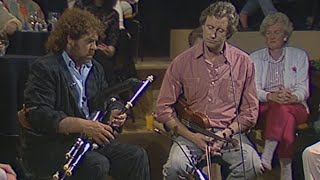
Jam Along & Learn...
Well there's a man here beside me now and he's neither stranger to television nor to traditional
Hi Finn Barthiory, very welcome.
Thanks very much indeed.
care and the making even of reeds for pipes, isn't that right?
I find that
in Ireland at [Gb] the moment because
art at the moment in Ireland and until somebody sort of gets a little
the pipes are going to suffer
Hi Finn Barthiory, very welcome.
Thanks very much indeed.
care and the making even of reeds for pipes, isn't that right?
I find that
in Ireland at [Gb] the moment because
art at the moment in Ireland and until somebody sort of gets a little
the pipes are going to suffer
100% ➙ 133BPM
G
D
Gb
Eb
E
G
D
Gb
Well there's a man here beside me now and he's neither stranger to television nor to traditional
music.
I'd like to give a very special welcome to Finn Barthiory.
Hi _ _ _ _ _ _ _ _ _ _ _ Finn Barthiory, very welcome.
Thanks very much indeed.
Now as a piper you take a special interest
in the care and the making even of reeds for pipes, isn't that right?
Yeah well I find that
I was talking to you earlier on [G] about the young pipers in Ireland at [Gb] the moment because
[Bb] reed making is a dying art at the moment in Ireland and until somebody sort of gets a little
school together where they can teach the kids how to make [Ab] reeds the pipes are going to suffer
really badly because you're getting a lot of young pipers going on the road at the moment
and they don't know how to make a reed.
They play great pipes but they can't make reeds for the
pipes.
The first thing [E] I was taught when I [G] was _ picked this instrument up first was to [Eb] make a
reed and Danny Dowd was one of the [E] great [G] helpers I had.
Danny taught me [Eb] first.
Let me show you [F] the
Chanta reed here for instance.
Now this is my favourite reed.
_ Anybody even looks at it [G] badly. _ _ _ _ _
[Eb] They're that tender you know, they're like a _ [G] good [Eb] woman, you look after them you know,
they look after you.
[G] Anyway _ you know it's very easy at [Gb] the moment for the young kids now [E] making
reeds because years ago we had to do, when I [Fm] first started off making reeds, we had to
make the staple out of copper and then bend it over and that's this part [Ab] on the inside
and whip it out.
It's the inner pipe.
This part here and now [Gb] you can buy it [F] in tube and in the brass and you can
it works the exact same and the only thing you have to worry about [G] is the [Eb] staple here, the belt
and years ago they used to make the reeds that were _ elder for the pipes but now it's all Spanish
cane and California and Cajun.
We don't know what we're doing you know, we're being spoiled.
_ [Ab] Well [G] who did you learn the pipes from then when you started off?
Your father was a fiddler.
[Gb]
Well I had, I was a very lucky young fellow actually you know, we grew up in Ballyfermuth when we were
[Fm] kids and we were on the road before that.
[E] My father _ being a musician and busker if you like.
Yeah.
And I had three teachers in Ballyfermuth.
That was my father first of all and a man by the
name of Johnny Keenan, that's Paddy [Gb] Keenan's father and another [F] great pal of mine who [C] taught me an awful
lot about [Gb] pipes and a man I [F] owe an awful lot to is a man called [Gb] Tommy Moore _ and Tommy [Em] was a great
piper himself.
So [Gb] myself and Paddy in a way were very lucky to have [E] these three teachers _ to help
us and of course we had Felix Dorden [Eb] dropping over and Felix used to stay in the house with my father
and mother so the house [Em] was always full and the odd time Seamus [Eb] Ennis would be there for the weekend
you know.
[Gm] So it was [E] one of these houses the music didn't stop.
I see.
Well you're going to give us a
blast now of one of those tunes that you learned long ago.
What's this going to be?
I'm going to play a piece
called Spalding and we're going to slow down [N] the pipes.
_ _ _ _ [D] _ _ _ _
_ _ _ _ _ [G] _ _ _
_ _ _ _ _ _ [D] _ _
_ _ _ _ _ _ _ _
_ _ _ _ _ _ _ _
_ _ _ _ _ _ _ _
_ _ _ _ _ _ _ _
_ _ _ _ _ _ _ _
_ [G] _ _ _ [D] _ _ [G] _ _
_ _ [D] _ _ _ _ _ _
_ _ _ _ _ _ _ _
[G] _ _ _ _ _ _ _ _
[D] _ _ _ _ _ _ _ _
_ _ _ _ _ _ _ _
_ _ _ _ _ _ _ _
_ _ _ _ _ _ _ _
_ _ _ _ _ _ _ _
_ _ _ _ _ _ _ _
_ _ _ _ _ _ _ _
_ _ _ _ _ _ _ _
_ _ _ _ [G] _ _ [D] _ _
_ _ _ _ [G] _ _ _ _
_ _ [D] _ _ _ _ _ _
_ _ _ _ _ _ _ _
_ _ _ _ _ _ _ _
_ _ _ _ _ _ _ _
_ _ _ _ _ _ _ _
_ _ _ _ [G] _ _ _ _
_ _ _ _ [D] _ _ _ _
_ _ _ _ _ _ _ _
_ _ _ _ _ _ [G] _ _
_ _ _ _ _ _ [D] _ _
_ _ _ _ _ _ _ _
_ _ _ _ _ _ _ _
_ [G] _ _ _ _ _ _ _
_ [D] _ _ _ _ _ _ _
_ _ _ _ _ _ [G] _ _
_ _ _ _ _ [D] _ _ _
_ _ _ _ _ _ _ _
_ _ _ _ _ _ _ _
_ _ _ _ _ _ _ _
_ _ [G] _ _ _ _ _ _
[D] _ _ _ _ _ _ _ _
_ _ _ _ _ _ _ _
_ _ _ _ _ _ [G] _ _
_ _ _ _ _ _ _ _
_ _ _ _ _ [D] _ _ _
_ _ _ _ [G] _ _ _ [D] _
_ _ _ _ [G] _ _ _ _
_ _ [D] _ _ _ _ _ _
_ _ _ _ _ _ _ _
_ _ _ [G] _ _ _ _ _
_ _ _ [D] _ _ _ _ _
_ _ _ _ _ _ _ _
_ _ [G] _ _ _ _ _ _
_ _ _ _ _ [D] _ _ _
_ _ _ _ _ _ _ _
_ _ _ _ _ _ _ _
_ [N] _ _ _ _ _ _ _
_ _ _ _ _ _ _ _
_ _ _ _ _ _ _ _
_ _ [D] _ _ _ _ _ _
_ _ _ _ _ _ _ _
_ _ _ _ _ _ [D] _ _
_ _ _ _ _ _ _ _
_ _ _ _ _ _ _ _
_ _ _ _ _ _ _ _
_ _ _ _ _ _ _ _
_ _ _ _ _ _ _ _
_ _ _ [G] _ _ _ _ [D] _
_ _ _ _ _ _ _ _
_ _ _ _ _ _ _ _
_ _ _ _ _ _ _ _
_ _ _ _ _ _ _ _
_ _ _ _ _ _ _ _
_ _ _ _ [G] _ _ _ _
_ _ _ _ _ _ _ _
_ _ _ _ [D] _ _ _ _
_ _ _ _ _ _ _ _
_ _ [G] _ _ _ _ [D] _ _
_ _ _ _ _ _ _ _
_ _ _ _ _ _ _ _
[N] _ _ _ _ _ _ _ _
_ _ _ _ _ _ _ _
_ _ _ _ _ _ _ _
_ _ _ _ _ _ _ _
_ _ _ _ _ We're going to play a piece called The Silver Chip and Seamus is going to play the main piece.
_ Seamus if I may ask you, fair play to you, _ you're very good.
You're going to play the piece,
you're going to listen to the piece and you'll get a bit of a gift.
I hope I'll get a bit _ _ of a gift.
_ _ We'll see about that.
_ _ We'll see about that.
Fair play to you.
We'll see about that _ _ _ _ Seamus.
_ _ _ _ _ _ _ _
music.
I'd like to give a very special welcome to Finn Barthiory.
Hi _ _ _ _ _ _ _ _ _ _ _ Finn Barthiory, very welcome.
Thanks very much indeed.
Now as a piper you take a special interest
in the care and the making even of reeds for pipes, isn't that right?
Yeah well I find that
I was talking to you earlier on [G] about the young pipers in Ireland at [Gb] the moment because
[Bb] reed making is a dying art at the moment in Ireland and until somebody sort of gets a little
school together where they can teach the kids how to make [Ab] reeds the pipes are going to suffer
really badly because you're getting a lot of young pipers going on the road at the moment
and they don't know how to make a reed.
They play great pipes but they can't make reeds for the
pipes.
The first thing [E] I was taught when I [G] was _ picked this instrument up first was to [Eb] make a
reed and Danny Dowd was one of the [E] great [G] helpers I had.
Danny taught me [Eb] first.
Let me show you [F] the
Chanta reed here for instance.
Now this is my favourite reed.
_ Anybody even looks at it [G] badly. _ _ _ _ _
[Eb] They're that tender you know, they're like a _ [G] good [Eb] woman, you look after them you know,
they look after you.
[G] Anyway _ you know it's very easy at [Gb] the moment for the young kids now [E] making
reeds because years ago we had to do, when I [Fm] first started off making reeds, we had to
make the staple out of copper and then bend it over and that's this part [Ab] on the inside
and whip it out.
It's the inner pipe.
This part here and now [Gb] you can buy it [F] in tube and in the brass and you can
it works the exact same and the only thing you have to worry about [G] is the [Eb] staple here, the belt
and years ago they used to make the reeds that were _ elder for the pipes but now it's all Spanish
cane and California and Cajun.
We don't know what we're doing you know, we're being spoiled.
_ [Ab] Well [G] who did you learn the pipes from then when you started off?
Your father was a fiddler.
[Gb]
Well I had, I was a very lucky young fellow actually you know, we grew up in Ballyfermuth when we were
[Fm] kids and we were on the road before that.
[E] My father _ being a musician and busker if you like.
Yeah.
And I had three teachers in Ballyfermuth.
That was my father first of all and a man by the
name of Johnny Keenan, that's Paddy [Gb] Keenan's father and another [F] great pal of mine who [C] taught me an awful
lot about [Gb] pipes and a man I [F] owe an awful lot to is a man called [Gb] Tommy Moore _ and Tommy [Em] was a great
piper himself.
So [Gb] myself and Paddy in a way were very lucky to have [E] these three teachers _ to help
us and of course we had Felix Dorden [Eb] dropping over and Felix used to stay in the house with my father
and mother so the house [Em] was always full and the odd time Seamus [Eb] Ennis would be there for the weekend
you know.
[Gm] So it was [E] one of these houses the music didn't stop.
I see.
Well you're going to give us a
blast now of one of those tunes that you learned long ago.
What's this going to be?
I'm going to play a piece
called Spalding and we're going to slow down [N] the pipes.
_ _ _ _ [D] _ _ _ _
_ _ _ _ _ [G] _ _ _
_ _ _ _ _ _ [D] _ _
_ _ _ _ _ _ _ _
_ _ _ _ _ _ _ _
_ _ _ _ _ _ _ _
_ _ _ _ _ _ _ _
_ _ _ _ _ _ _ _
_ [G] _ _ _ [D] _ _ [G] _ _
_ _ [D] _ _ _ _ _ _
_ _ _ _ _ _ _ _
[G] _ _ _ _ _ _ _ _
[D] _ _ _ _ _ _ _ _
_ _ _ _ _ _ _ _
_ _ _ _ _ _ _ _
_ _ _ _ _ _ _ _
_ _ _ _ _ _ _ _
_ _ _ _ _ _ _ _
_ _ _ _ _ _ _ _
_ _ _ _ _ _ _ _
_ _ _ _ [G] _ _ [D] _ _
_ _ _ _ [G] _ _ _ _
_ _ [D] _ _ _ _ _ _
_ _ _ _ _ _ _ _
_ _ _ _ _ _ _ _
_ _ _ _ _ _ _ _
_ _ _ _ _ _ _ _
_ _ _ _ [G] _ _ _ _
_ _ _ _ [D] _ _ _ _
_ _ _ _ _ _ _ _
_ _ _ _ _ _ [G] _ _
_ _ _ _ _ _ [D] _ _
_ _ _ _ _ _ _ _
_ _ _ _ _ _ _ _
_ [G] _ _ _ _ _ _ _
_ [D] _ _ _ _ _ _ _
_ _ _ _ _ _ [G] _ _
_ _ _ _ _ [D] _ _ _
_ _ _ _ _ _ _ _
_ _ _ _ _ _ _ _
_ _ _ _ _ _ _ _
_ _ [G] _ _ _ _ _ _
[D] _ _ _ _ _ _ _ _
_ _ _ _ _ _ _ _
_ _ _ _ _ _ [G] _ _
_ _ _ _ _ _ _ _
_ _ _ _ _ [D] _ _ _
_ _ _ _ [G] _ _ _ [D] _
_ _ _ _ [G] _ _ _ _
_ _ [D] _ _ _ _ _ _
_ _ _ _ _ _ _ _
_ _ _ [G] _ _ _ _ _
_ _ _ [D] _ _ _ _ _
_ _ _ _ _ _ _ _
_ _ [G] _ _ _ _ _ _
_ _ _ _ _ [D] _ _ _
_ _ _ _ _ _ _ _
_ _ _ _ _ _ _ _
_ [N] _ _ _ _ _ _ _
_ _ _ _ _ _ _ _
_ _ _ _ _ _ _ _
_ _ [D] _ _ _ _ _ _
_ _ _ _ _ _ _ _
_ _ _ _ _ _ [D] _ _
_ _ _ _ _ _ _ _
_ _ _ _ _ _ _ _
_ _ _ _ _ _ _ _
_ _ _ _ _ _ _ _
_ _ _ _ _ _ _ _
_ _ _ [G] _ _ _ _ [D] _
_ _ _ _ _ _ _ _
_ _ _ _ _ _ _ _
_ _ _ _ _ _ _ _
_ _ _ _ _ _ _ _
_ _ _ _ _ _ _ _
_ _ _ _ [G] _ _ _ _
_ _ _ _ _ _ _ _
_ _ _ _ [D] _ _ _ _
_ _ _ _ _ _ _ _
_ _ [G] _ _ _ _ [D] _ _
_ _ _ _ _ _ _ _
_ _ _ _ _ _ _ _
[N] _ _ _ _ _ _ _ _
_ _ _ _ _ _ _ _
_ _ _ _ _ _ _ _
_ _ _ _ _ _ _ _
_ _ _ _ _ We're going to play a piece called The Silver Chip and Seamus is going to play the main piece.
_ Seamus if I may ask you, fair play to you, _ you're very good.
You're going to play the piece,
you're going to listen to the piece and you'll get a bit of a gift.
I hope I'll get a bit _ _ of a gift.
_ _ We'll see about that.
_ _ We'll see about that.
Fair play to you.
We'll see about that _ _ _ _ Seamus.
_ _ _ _ _ _ _ _