Chords for Understanding chord progression theory using the number system - (part 1)
Tempo:
73 bpm
Chords used:
Tuning:Standard Tuning (EADGBE)Capo:+0fret

Jam Along & Learn...
In this video I'm going to teach you how the chord progression theory and how the number system all kind of work together.
you watch this you'll definitely want to see the lesson on the major scale and the number system and how that relates.
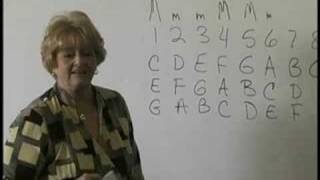
the musical alphabet here.
So not only do the numbers in the number system, 1 through 7, represent notes,
but when you're talking about in the context of chords, there's a few things you have to memorize and understand.
In the number system there is chords ranging from 1 through 7.
1, 4, and 5 are by default major chords.
2, 3, and 6 are by default minor chords.
you watch this you'll definitely want to see the lesson on the major scale and the number system and how that relates.
the musical alphabet here.
So not only do the numbers in the number system, 1 through 7, represent notes,
but when you're talking about in the context of chords, there's a few things you have to memorize and understand.
In the number system there is chords ranging from 1 through 7.
1, 4, and 5 are by default major chords.
2, 3, and 6 are by default minor chords.
100% ➙ 73BPM

In this video I'm going to teach you how the chord progression theory and how the number system all kind of work together.
And so before you watch this you'll definitely want to see the lesson on the major scale and the number system and how that relates.
Because it's basically built off of that.
So let me put up the musical alphabet here.
Okay, there it is.
The 12 notes. _
So not only do the numbers in the number system, 1 through 7, represent notes,
but when you're talking about in the context of chords, there's a few things you have to memorize and understand.
So let me go over these with you.
So the first thing is this. _
_ In the number system there is chords ranging from 1 through 7.
_ _ Chords 1, 4, and 5 are by default major chords.
_ _ _ _ _ Chords 2, _ 3, and 6 are by default _ minor chords.
So since these are the default, when you see 1, 4, 5 as a chord, those are going to be major chords.
2, 3, and 6 are going to be minor chords.
There's no need to put a little m after 3 or 6 or 2 because you just have to learn that 2, 3, and 6 are minor.
And that's kind of the difference between the Nashville number system versus the number system we use here.
Since these are by default that way, we don't even indicate it with a little m.
Number 7, which is hardly ever used in a chord, they're used as a base note, but is what's called a diminished _ chord.
_ _ So this is kind of how it works.
Once you understand how to convert a chord chart into numbers by using the major scale,
so let's say we're in the key of A.
_ This _ _ would be the root _ chord, which is also the number 1 chord.
Then you create the whole whole half whole whole half, which will give you 1 here.
_ _ _ B will be 2, which will be B minor.
3 would be C sharp or D flat, which would be either C sharp minor or D flat minor.
_ 4 would be D.
_ If you're wondering how I'm getting these, you've got to watch the lesson on the major scale in the number system.
5 is E.
_ 6 is F sharp or G flat. _
_ _ 7 is G sharp or A flat.
And back to half would take you right back to the root, which is number 1.
So through this, here are the chords using chord progression theory in the number system.
So _ _ _ 1 equals A major.
2 equals B minor.
Remember, because 2, 3, and 6's are minor by default. _ _
3 equals either C sharp or D flat.
You can call it either one.
Technically, you know, musical majors might get all over you, but who cares really?
All you really care about is the location of that note.
3 would be C sharp minor.
4 would be D major.
_ _ _ 5 would be E.
Now for this lesson, we're just going to call it E major because we're only talking about three-note chords.
6 would be _ F sharp or G flat.
Once again, you can call it either one.
We're going to call this one F sharp minor.
7 would be _ G sharp or A flat.
We'll call it G sharp diminished.
Okay?
Now what you need to know is this represents chords.
It doesn't represent if you had a slash chord.
Let's say a slash chord that said 1 slash 3 would be an A over 3, which would be a C sharp or D flat.
But because the slash _ represents only a note, not a chord, it wouldn't be a C sharp minor or D flat minor
because the chord is only on the left side of this slash or the top, and the right side is just a bass note.
So it would be C sharp.
And if you want to know more about that, watch the lesson on slash chords and it'll show you.
But that's basically how the chord progression works using the number system.
And so before you watch this you'll definitely want to see the lesson on the major scale and the number system and how that relates.
Because it's basically built off of that.
So let me put up the musical alphabet here.
Okay, there it is.
The 12 notes. _
So not only do the numbers in the number system, 1 through 7, represent notes,
but when you're talking about in the context of chords, there's a few things you have to memorize and understand.
So let me go over these with you.
So the first thing is this. _
_ In the number system there is chords ranging from 1 through 7.
_ _ Chords 1, 4, and 5 are by default major chords.
_ _ _ _ _ Chords 2, _ 3, and 6 are by default _ minor chords.
So since these are the default, when you see 1, 4, 5 as a chord, those are going to be major chords.
2, 3, and 6 are going to be minor chords.
There's no need to put a little m after 3 or 6 or 2 because you just have to learn that 2, 3, and 6 are minor.
And that's kind of the difference between the Nashville number system versus the number system we use here.
Since these are by default that way, we don't even indicate it with a little m.
Number 7, which is hardly ever used in a chord, they're used as a base note, but is what's called a diminished _ chord.
_ _ So this is kind of how it works.
Once you understand how to convert a chord chart into numbers by using the major scale,
so let's say we're in the key of A.
_ This _ _ would be the root _ chord, which is also the number 1 chord.
Then you create the whole whole half whole whole half, which will give you 1 here.
_ _ _ B will be 2, which will be B minor.
3 would be C sharp or D flat, which would be either C sharp minor or D flat minor.
_ 4 would be D.
_ If you're wondering how I'm getting these, you've got to watch the lesson on the major scale in the number system.
5 is E.
_ 6 is F sharp or G flat. _
_ _ 7 is G sharp or A flat.
And back to half would take you right back to the root, which is number 1.
So through this, here are the chords using chord progression theory in the number system.
So _ _ _ 1 equals A major.
2 equals B minor.
Remember, because 2, 3, and 6's are minor by default. _ _
3 equals either C sharp or D flat.
You can call it either one.
Technically, you know, musical majors might get all over you, but who cares really?
All you really care about is the location of that note.
3 would be C sharp minor.
4 would be D major.
_ _ _ 5 would be E.
Now for this lesson, we're just going to call it E major because we're only talking about three-note chords.
6 would be _ F sharp or G flat.
Once again, you can call it either one.
We're going to call this one F sharp minor.
7 would be _ G sharp or A flat.
We'll call it G sharp diminished.
Okay?
Now what you need to know is this represents chords.
It doesn't represent if you had a slash chord.
Let's say a slash chord that said 1 slash 3 would be an A over 3, which would be a C sharp or D flat.
But because the slash _ represents only a note, not a chord, it wouldn't be a C sharp minor or D flat minor
because the chord is only on the left side of this slash or the top, and the right side is just a bass note.
So it would be C sharp.
And if you want to know more about that, watch the lesson on slash chords and it'll show you.
But that's basically how the chord progression works using the number system.